
7 Regulatory Mistakes That Delay Industrial Projects | Industrial Approval Guide
Planning an industrial project?
Discover the 7 most common regulatory mistakes that delay approvals and learn how early planning can save time and cost.
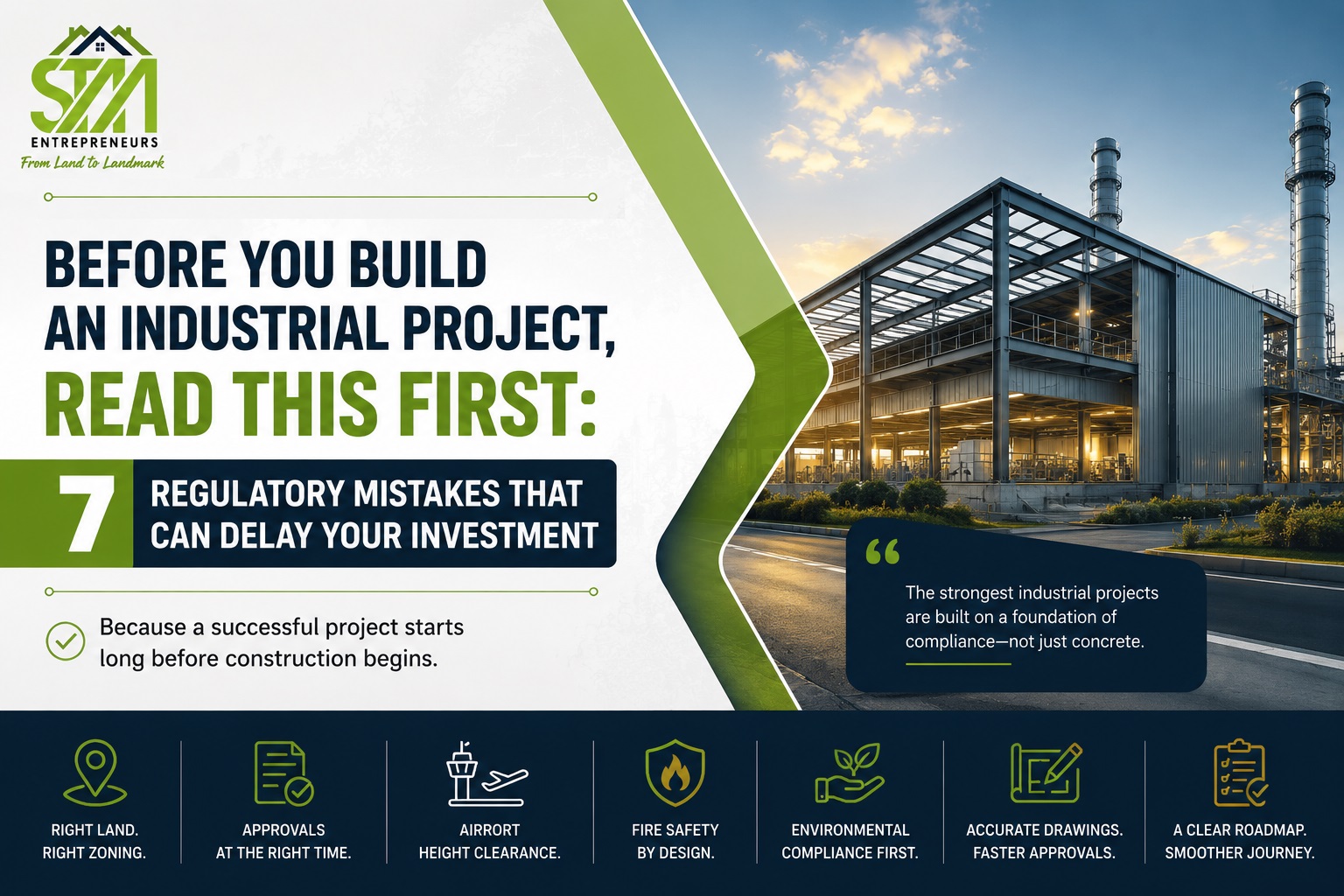
Before You Build an Industrial Project, Read This First
Imagine investing crores in an industrial project—only to discover that construction cannot begin because a critical approval was overlooked.
This is one of the most common reasons industrial projects face delays. Surprisingly, the challenge is rarely the construction itself; it’s navigating the approval process at the right time and in the right sequence.
Here are seven mistakes that can delay an otherwise well-planned project.
1. Assuming Every Industrial Land Parcel Is Ready for Development
Not every parcel of land is immediately suitable for industrial use. Before making an investment, verify zoning regulations, land use status, and applicable development controls.
2. Treating Regulatory Approvals as a Post-Construction Activity
Approvals are not formalities—they are prerequisites. Planning for statutory approvals at the design stage helps avoid costly redesigns and unnecessary delays.
3. Ignoring Height Restrictions Near Airports
Industrial buildings, chimneys, silos, and storage structures may require clearance based on their location and proposed height. Addressing this early can prevent major revisions later.
4. Underestimating Fire & Safety Compliance
Fire safety should be integrated into the building design from the outset. Retrofitting after construction is often more expensive and time-consuming.
5. Delaying Environmental & Pollution Control Approvals
Many industrial activities require environmental permissions before operations begin. Understanding these requirements early ensures smoother project execution.
6. Submitting Incomplete Technical Drawings
Even minor inconsistencies in architectural, structural, or service drawings can lead to repeated observations and extend approval timelines.
7. Working Without a Clear Approval Roadmap
Industrial projects involve multiple authorities, each with its own requirements. A structured approval strategy helps maintain project momentum and minimizes avoidable delays.
The Bottom Line
Successful industrial projects are built on more than engineering excellence—they rely on careful planning, regulatory awareness, and timely compliance.
The earlier approvals are considered in the project lifecycle, the smoother the journey from concept to commissioning.
Good planning doesn’t just accelerate approvals—it protects your investment.